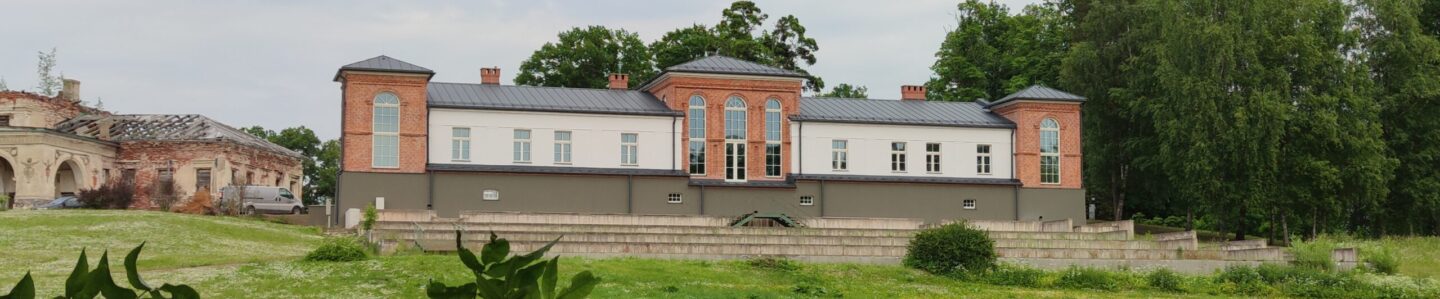
Bust of Maria von Wolff and wolf sculptures
Bust of Maria von Wolff
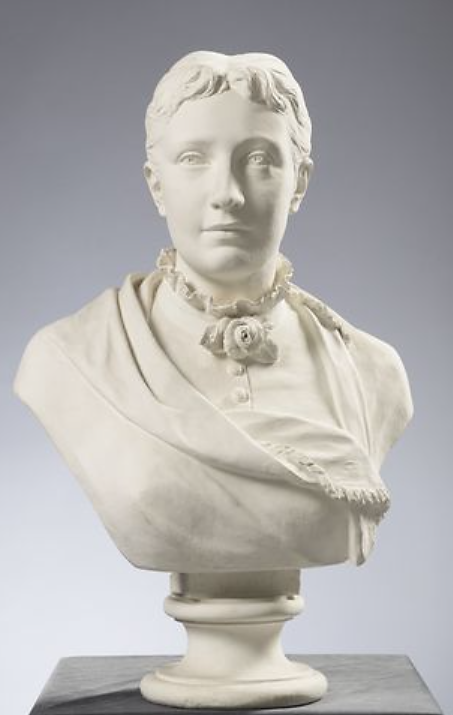
In 2024, with the support of the State Culture Capital Foundation, the Gulbene Municipality History and Art Museum expanded its collection with the bust of Maria (also known as Marisa) von Wolff (née von Oettingen, 1857–1883), crafted in Rome in 1881.
The author of the bust is the Estonian sculptor August Weizenberg (1837–1921), who was working in Rome at the time (from 1873 to 1890). Weizenberg has entered history as the founder of the Estonian national school of sculpture and the creator of numerous allegorical and folklore-based sculptures.
On September 30, 1875, having just turned 18, Marisa married the owner of Vecgulbene Manor, Johann Gottlieb Heinrich von Wolff (1843–1897). He is remembered in history as the builder of the so-called Red Palace, the remodeler of the White Palace, the expander of the estate’s economic complex, and the landscaper of the manor parks. Their life together lasted only seven and a half years, as Marisa contracted a then-incurable disease and passed away in Rome on March 20, 1883.
Wolf sculptures of the main entrance portal of Vecgulbene manor’s White palace
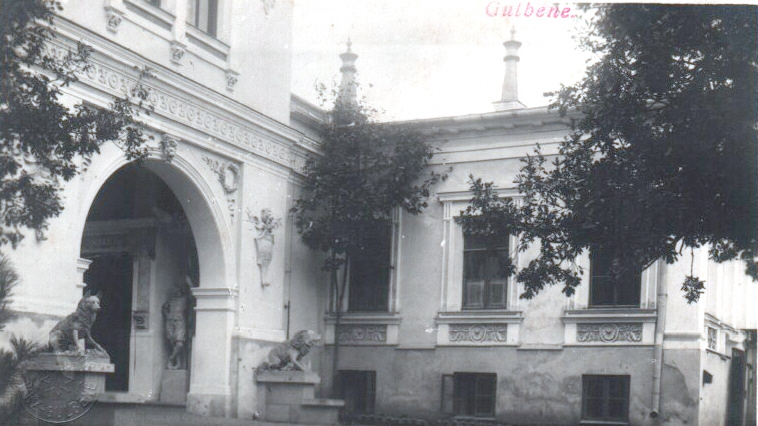
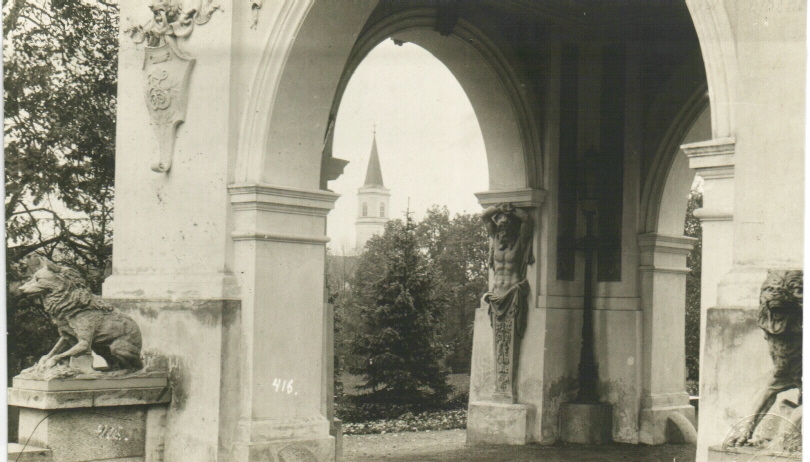
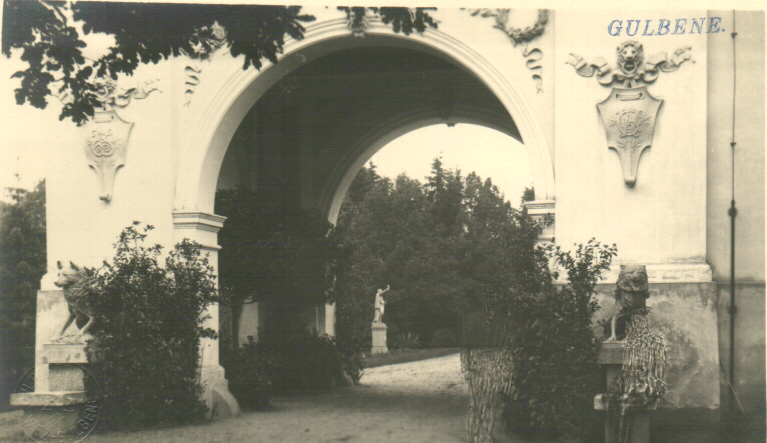
In his book Vecgulbenes muiža. Viens no fon Volfu īpašniekiem Vidzemē (“Vecgulbene Manor: One of the von Wolf Properties in Vidzeme”, 2010), researcher Jānis Zilgalvis writes:
“Even more ornate was the two-story tower by the main entrance. Approaching it from the driveway, wolf figures were positioned on pedestals on both sides of the entrance porch—two resembling ordinary wolves, while the other two depicted fantastic predators. These sculptures disappeared after 1905. At a significant time—in 2006, precisely 100 years later—the new owners of the manor announced a search for anything related to the history of the estate. It did not take long before the sought-after wolf sculptures were offered from a nearby farmstead; unfortunately, only two of the four. Nevertheless, even that was a valuable acquisition.”
At the end of 2024, the Gulbene Municipality History and Art Museum received a donation from Ainars Melders, the owner of the White Palace—terracotta sculptures that had sustained damage over time. Following a detailed study of historical photographs, the wolf sculptures were painstakingly restored by Gunārs Grīnfelds, a master restorer specializing in monumental decorative sculpture.
The bases of the terracotta sculptures also feature the signature of their creator. Richard Rusche (1851–1935) was a German sculptor, painter, and draftsman whose artistic work focused primarily on animal and hunting motifs. Rusche became one of the most acclaimed animalier sculptors of his time, with his sculptures characterized by both flawless naturalism and successfully highlighted traits specific to each animal species. Most likely, the sculptures were manufactured as a custom commission for Heinrich Johann Gottlieb von Wolff (1843–1897), the owner of Vecgulbene Manor, at the “Ernst March & Söhne Tonwarenfabrik” terracotta factory in Charlottenburg, Berlin, during the 1880s–1890s.